Edifier M60 vs Audioengine A2+ Gen 3
Compare a feature-rich work desk with RCA flexibility and subwoofer expansion.
Read the comparison →Work / Comparison
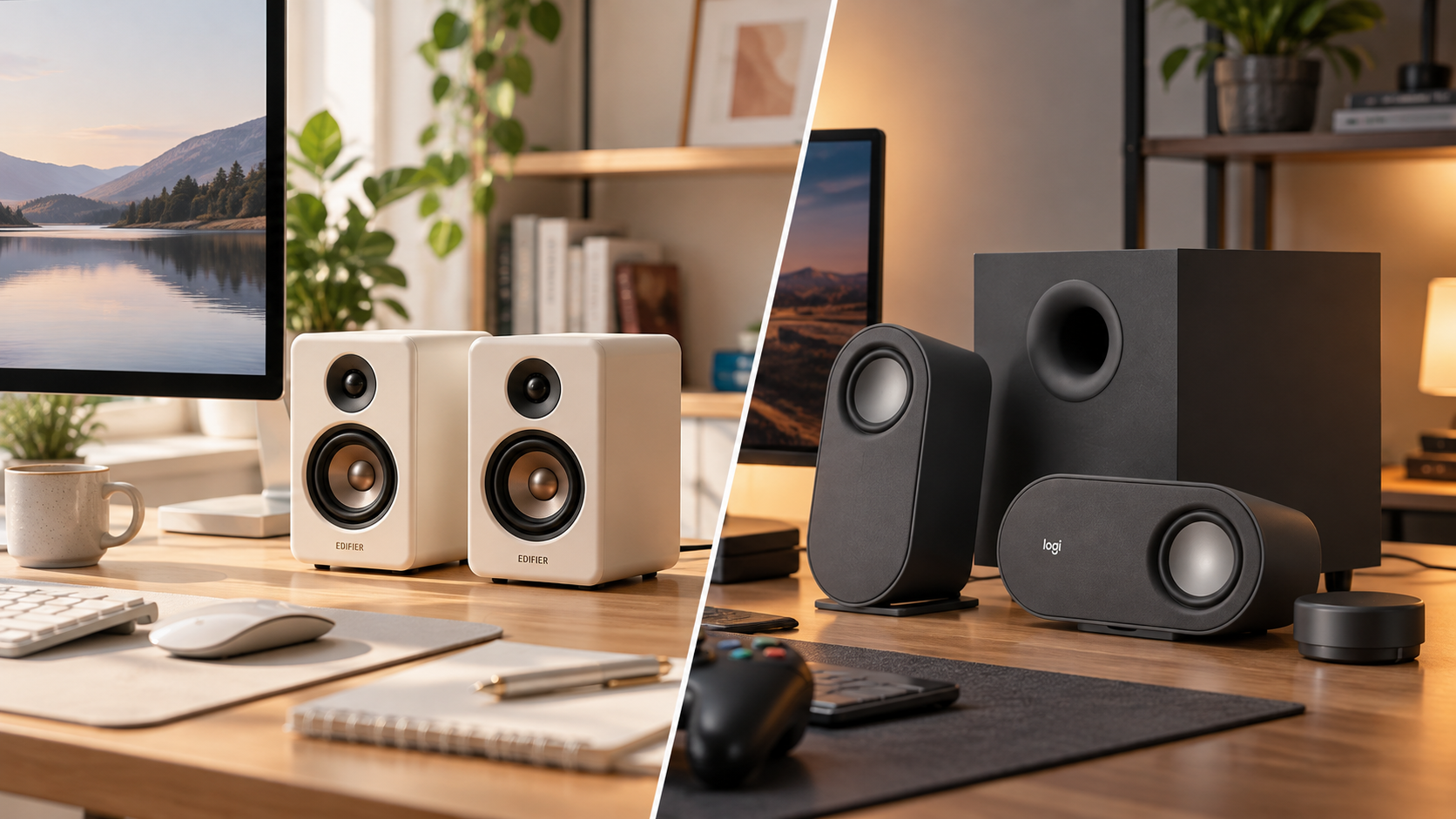
The Edifier M60 and Logitech Z407 take very different approaches to desktop audio. The M60 prioritizes compact design and near-field listening, while the Z407 uses a separate subwoofer to deliver more bass at a lower price.
For a modern work desk, the real question is whether the M60's cleaner setup and more refined desktop focus are worth paying extra for.
01 / Comparison
The Edifier M60 is the stronger fit for a modern workspace, with a smaller footprint, cleaner setup, and a sound profile better suited to close-range everyday listening. The Logitech Z407 costs less and adds a dedicated subwoofer, making it more attractive for bass, movies, and gaming.
Choose the Edifier M60 for work, small desks, podcasts, and daily music. Choose the Logitech Z407 if lower price and stronger bass matter more.
02 / Comparison
| Decision factor | Edifier M60 | Logitech Z407 |
|---|---|---|
| Best fit | Modern workspaces | Entertainment / value |
| Speaker system | 2.0 stereo | 2.1 with subwoofer |
| Rated output | 66W RMS | 40W RMS / 80W peak |
| Dedicated subwoofer | No | Yes |
| Main inputs | USB-C, Bluetooth 5.3, 3.5mm AUX | USB, Bluetooth, 3.5mm |
| Desktop footprint | Smaller, simpler | Larger overall system |
| Sound priority | Balanced near-field listening | Bass impact |
| Controls | Top touch controls / source device | Wireless control dial |
| Work / spoken audio | Stronger fit | Good |
| Movies / gaming | Good | Stronger fit |
| Price positioning | Premium | More affordable |
| Main reason to choose | Better desk integration | More bass for the money |
Specifications are based on the manufacturer information and product materials used for this comparison. Exact pricing can change.
03 / Comparison
The Edifier M60 is built around a simple idea: desktop speakers should sound substantially better than a laptop or monitor without taking over the workspace.
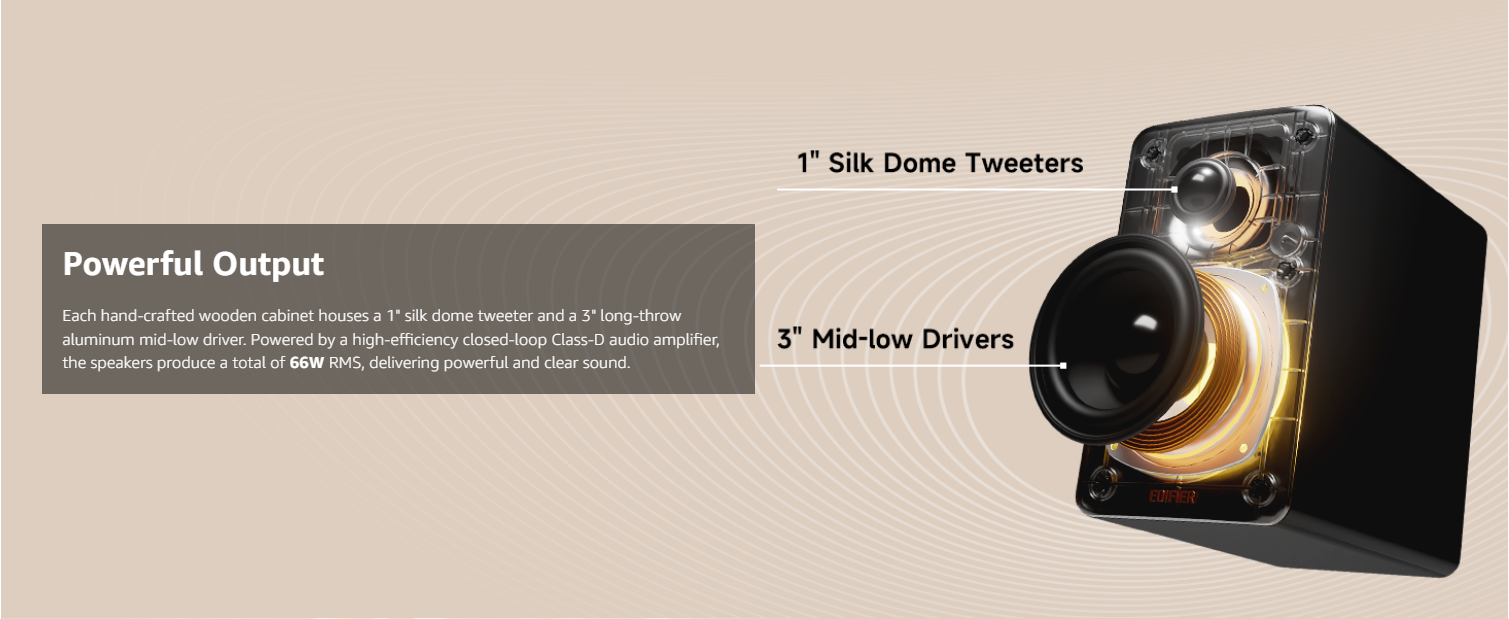
Each speaker uses a 1-inch silk-dome tweeter and a 3-inch mid-low driver, with the pair rated at 66W RMS. The cabinets are roughly 100 x 168 x 147 mm each, and Edifier includes 15-degree stands that angle the drivers toward the listener. USB-C, Bluetooth 5.3 with LDAC support, and 3.5mm AUX cover the most common desk connections.
That combination makes the M60 especially relevant for people who spend hours at one desk. The speakers can sit beside a monitor without requiring a separate subwoofer under the desk, and the stereo pair is designed around close-range listening rather than room-filling impact.
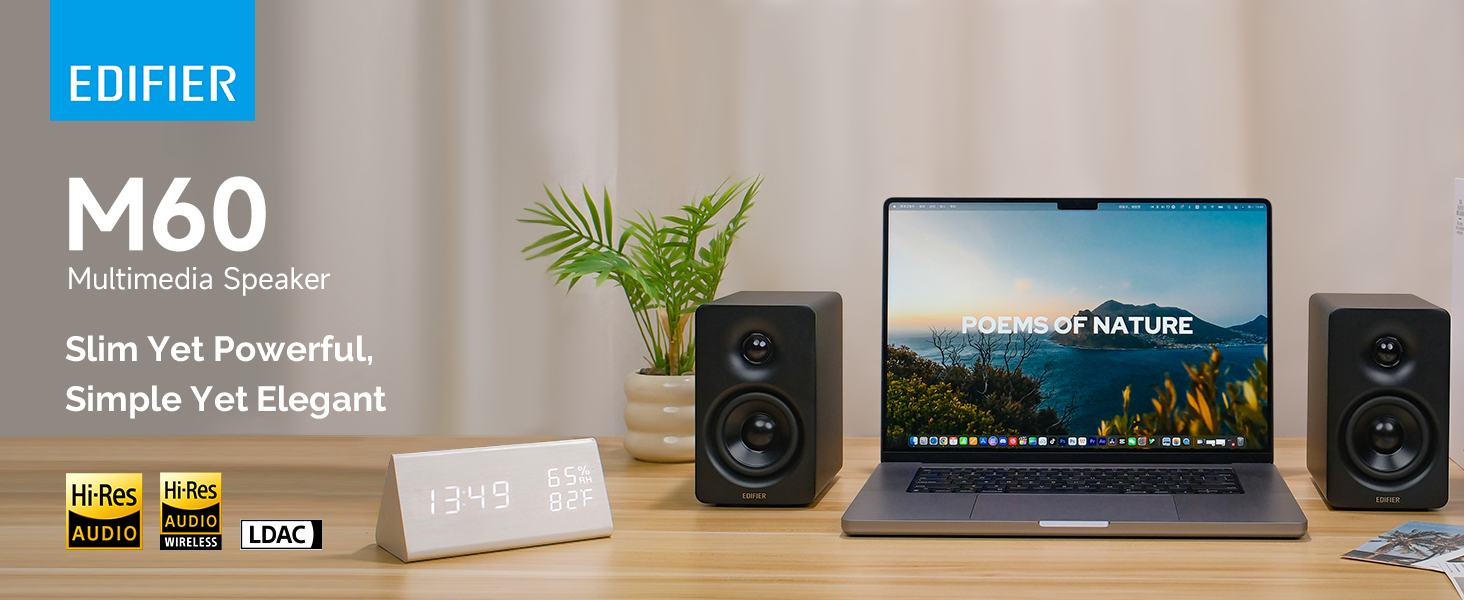
A home-office speaker is often used differently from a living-room speaker. You may listen to music quietly for hours, switch to training videos or podcasts, watch short videos between tasks, and keep the speakers only a few feet from your ears.
In that context, clarity, stereo separation, and a compact footprint can matter more than maximum bass. The M60's value is not that it produces the biggest sound in this comparison. It is that it gives you a more capable stereo setup without adding much physical clutter.
For a desk already holding a monitor, laptop stand, dock, chargers, keyboard, notebook, and other work gear, that is a meaningful advantage.
The M60's two-way design gives it a different character from basic PC speakers. In the prior M60 research used for this comparison, independent reviews and owner feedback consistently supported the same broad conclusion: it sounds larger and more refined than its compact size suggests, particularly for vocals, music, and normal near-field listening.
It still has physical limits. There is no dedicated subwoofer, and very deep bass is not the reason to buy it. If you want cinematic low-end impact, the Z407 has an obvious hardware advantage.
04 / Comparison
The Logitech Z407 uses a more traditional 2.1 layout: two satellite speakers plus a dedicated down-firing subwoofer. Logitech rates the system at 40W RMS and 80W peak, with the subwoofer accounting for a large part of its appeal.
That gives the Z407 a straightforward advantage for buyers who want more low-frequency weight from movies, games, and bass-heavy music. It also tends to cost less than the M60, making it an easy product to consider if raw value and stronger bass are the main priorities.
The Amazon listing supplied for this comparison showed the Z407 at 4.3 out of 5 from 3,896 global ratings, with a price of $115.50 at the time captured. Amazon's customer summary highlighted quality and value for money positively, while sound quality, Bluetooth connectivity, reliability, volume control, and controls received more mixed feedback.
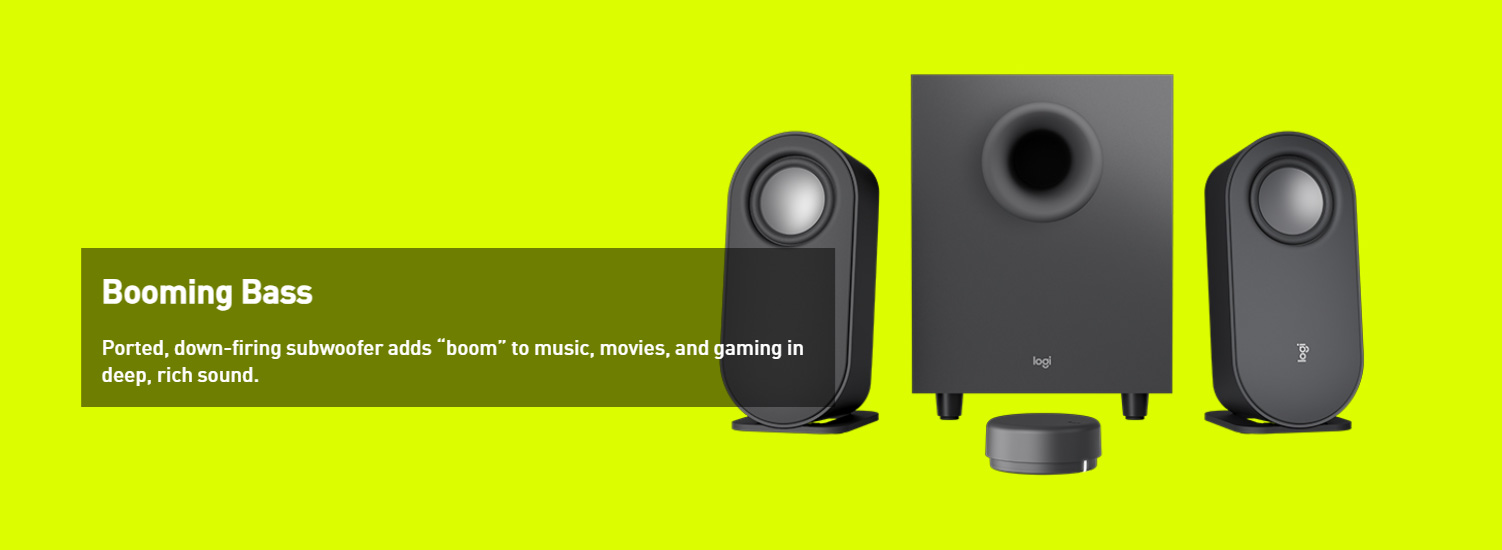
The dedicated subwoofer is the Z407's clearest advantage over the M60. Low-frequency effects in games and movies have more physical weight, and bass-heavy music benefits from hardware the M60 simply does not include.
But the extra hardware also changes the desk.
You need somewhere for the subwoofer, additional cabling, two satellites, and the control dial. The satellites themselves are relatively compact, but the full system occupies more physical and visual space than a simple 2.0 pair.
That is not a flaw if entertainment is the priority. It is a trade-off if your goal is a clean workstation.
05 / Comparison
For a workspace-first setup, the Edifier M60 is easier to integrate.
There is no separate bass box to place under the desk. The two cabinets create a symmetrical stereo layout, and Edifier's included angled stands help point the drivers toward ear level. The overall result looks and behaves more like a compact desktop audio system than a traditional PC-speaker bundle.
The Z407 can still work on a home-office desk, but it asks for more space. Its subwoofer is part of the reason it sounds bigger, so you cannot remove that hardware without removing one of the product's main advantages.
This is the first major reason to pay more for the M60: the premium goes partly toward getting better desktop audio without expanding the system into a larger 2.1 setup.
06 / Comparison
There is no honest universal winner here because the two systems optimize for different listening goals.
For work, podcasts, courses, YouTube, and background music, the M60's strengths align more closely with how the speakers are likely to be used for hours at a time.
For entertainment, the Z407's subwoofer becomes much more persuasive.
07 / Comparison
The two products also take different approaches to control.
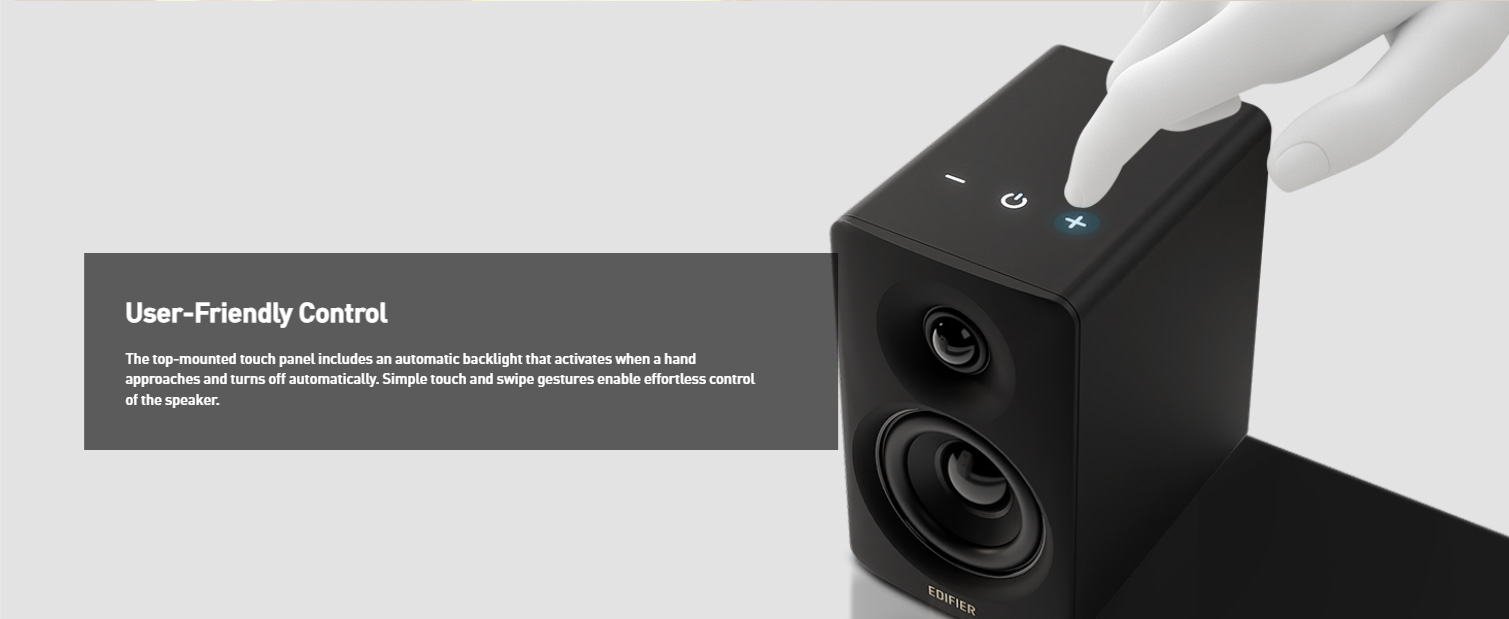
The M60 uses touch controls on the top of the active speaker. The design keeps the front clean, but some users prefer the certainty of a physical knob. Volume can also be managed from the connected computer or phone.
The Z407 includes a separate wireless control dial. It is one of the system's most distinctive features because you can place it where it is convenient and use it for volume and other controls without reaching for the speaker.
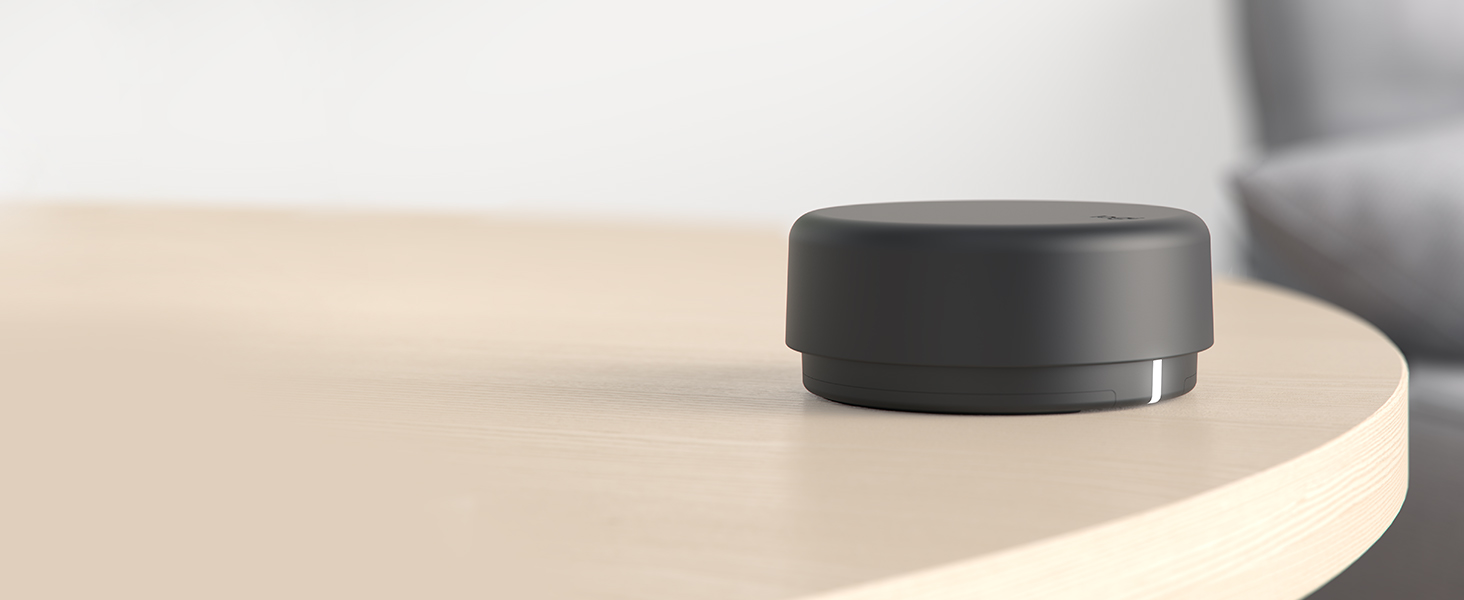
The dial is also one of the more mixed parts of owner feedback. The supplied Amazon reviews include complaints about pairing behavior, standby/wake behavior, unpredictable volume changes, and frustration when the control puck does not behave as expected.
Those reports do not justify calling the Z407 unreliable overall. With a 4.3-star average from thousands of ratings, most buyers are clearly not reporting a failed system. But they do show that the wireless control layer adds complexity to a product whose headline appeal is otherwise straightforward.
The M60 has its own control trade-off: some owners simply want a physical volume knob. The difference is less about one system being perfect and more about which type of friction you would rather accept.
08 / Comparison
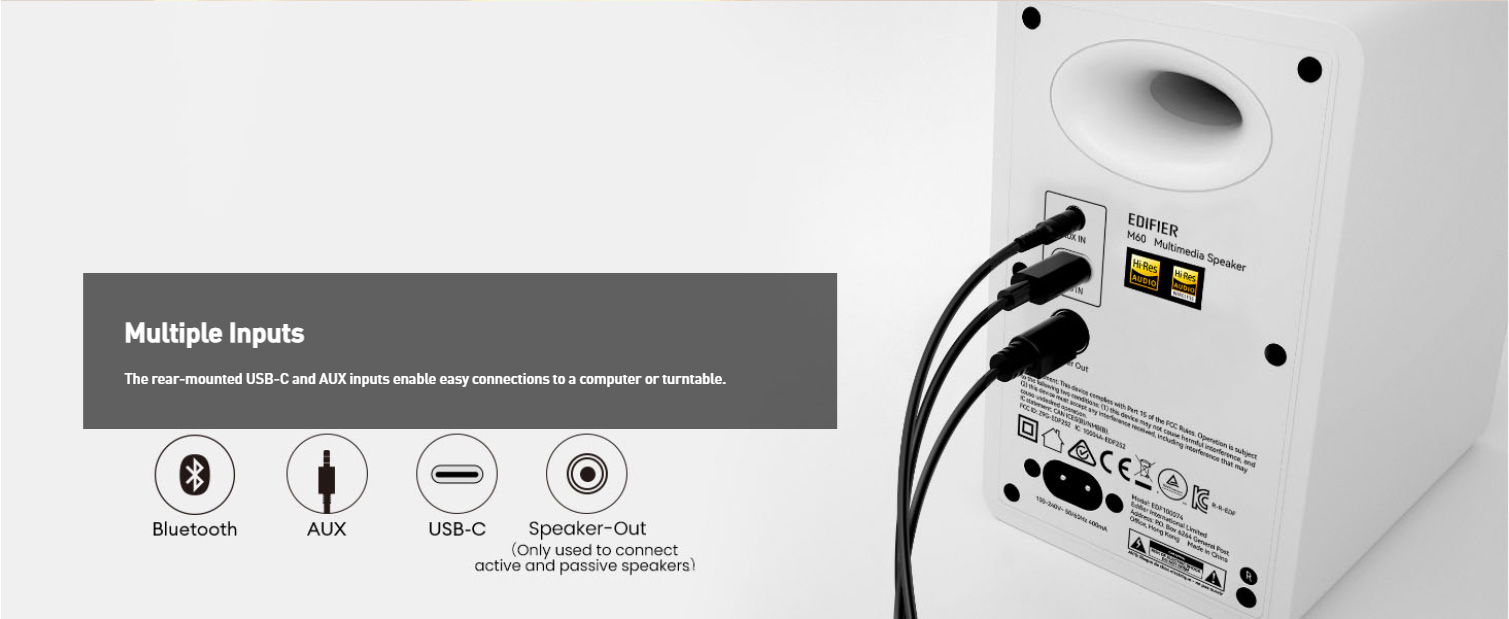
The Edifier M60 supports USB-C audio, Bluetooth 5.3, and 3.5mm AUX. For a modern laptop or desktop, USB-C gives it a particularly clean wired option, while Bluetooth is useful when switching to a phone or tablet.
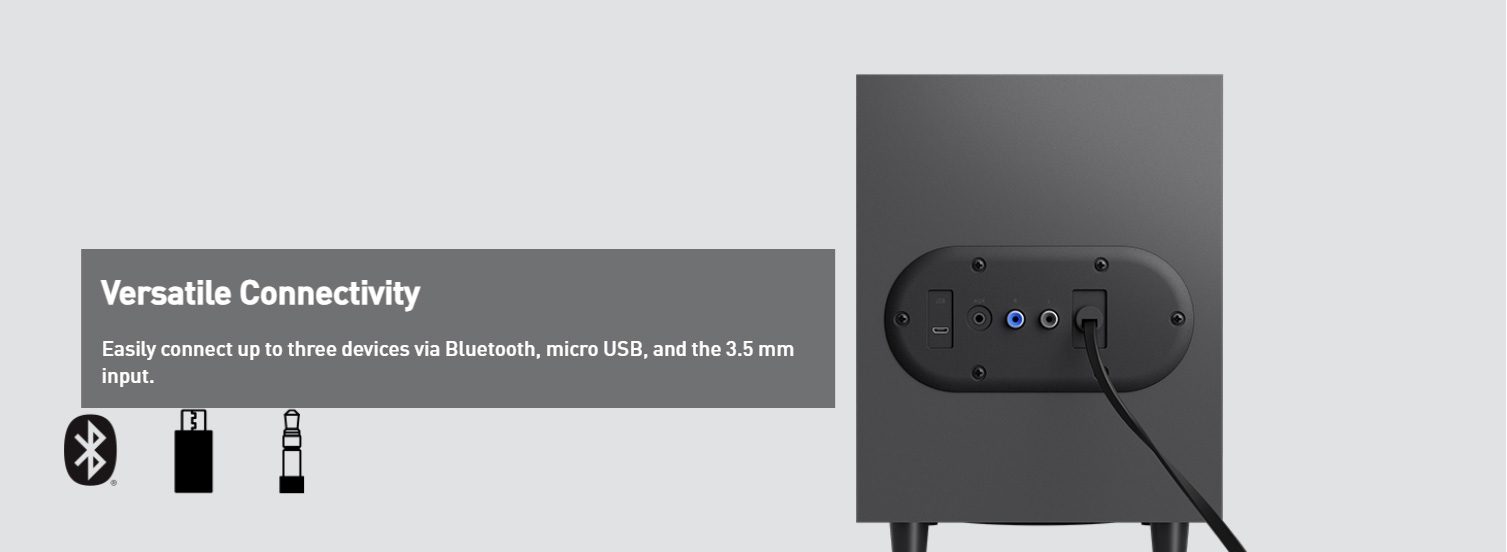
The Logitech Z407 supports Bluetooth, USB audio, and 3.5mm input. That is enough for common PC, laptop, phone, and other source setups, and its multiple-input design remains practical.
Both products have some connection-related complaints in customer feedback. M60 lower-rated reviews have included Bluetooth, USB-C, and source-switching issues on certain setups. Z407 feedback is more mixed around Bluetooth connectivity and the wireless control system.
For a single permanent desk computer, either can be straightforward. For users constantly switching among several devices, neither should be treated as completely friction-free without checking how its control scheme fits your workflow.
09 / Comparison
| Scenario | Better fit | Why |
|---|---|---|
| Home office | Edifier M60 | Compact system and near-field focus |
| Small desk | Edifier M60 | No separate subwoofer |
| Podcasts / courses / spoken audio | Edifier M60 | Balanced desktop listening |
| Music during work | Edifier M60 | Stereo separation without a larger system |
| Movies | Logitech Z407 | Dedicated subwoofer |
| Gaming | Logitech Z407 | More low-end impact |
| Bass-heavy music | Logitech Z407 | Separate bass driver |
| Lowest upfront cost | Logitech Z407 | Lower price in the listings reviewed |
| Minimalist desk aesthetic | Edifier M60 | Fewer components |
This is why the M60 can still make sense even when the Z407 is cheaper. The extra cost is not buying a bigger number on a specification sheet. It is buying a different kind of desktop system.
10 / Comparison
The Logitech Z407 makes a strong value argument: it costs less and includes a dedicated subwoofer. If your goal is simply to get more bass for the money, that is difficult to ignore.
The reason to pay more for the Edifier M60 is different. You are paying for a speaker system that integrates more naturally into a modern desk setup, avoids a separate subwoofer, and puts more emphasis on close-range everyday listening.
For someone who spends several hours every day at the same desk, those differences can matter more than maximum bass output.
| If you care most about... | Better fit |
|---|---|
| Small, organized desk | Edifier M60 |
| Workday listening | Edifier M60 |
| Podcasts and spoken audio | Edifier M60 |
| Minimal extra hardware | Edifier M60 |
| Modern USB-C desktop setup | Edifier M60 |
| Lower purchase price | Logitech Z407 |
| Strong bass | Logitech Z407 |
| Movies and gaming | Logitech Z407 |
The M60 therefore makes the strongest case when the speakers are part of the workspace itself rather than an entertainment system attached to a computer.
11 / Comparison
Customer feedback helps reveal trade-offs that specifications do not.
The prior M60 evidence set used by Nolmira showed broadly positive feedback around sound quality, appearance, setup, build quality, volume, and overall performance. Lower-rated reviews raised smaller but recurring concerns around Bluetooth or USB-C connection behavior, source switching, the lack of a physical volume knob, and isolated hardware or noise issues.
The pattern fits the product's role: most users appear to like the compact sound-and-size balance, while the main objections are controls, compatibility edge cases, and whether the higher price is justified for their needs.
The Amazon data supplied for the Z407 showed quality and value for money as positive themes. More mixed feedback appeared around sound quality, Bluetooth connectivity, reliability, volume control, volume, and controls.
Representative lower-rated reviews mention wireless dial frustration, automatic standby and wake behavior, connection issues, intermittent sound, and some longer-term hardware failures. Those reports are minority risk signals, not evidence that every Z407 will develop the same problems.
The practical takeaway is that the Z407's lower price does not automatically make it the simpler experience. Its wireless dial and 2.1 architecture add convenience and bass, but also more components and another control layer.
12 / Comparison
Best fit: remote workers, creators, small workstations, and people who want a meaningful audio upgrade without adding a subwoofer.
Best fit: entertainment-focused PC setups and buyers who want more bass for the money.
13 / Comparison
The Logitech Z407 is the stronger value proposition if your priorities are lower price and more bass. Its dedicated subwoofer gives movies, games, and bass-heavy music an advantage the compact M60 cannot fully reproduce.
But for a workspace-first setup, the Edifier M60 is the more cohesive choice.
It uses less space, avoids a separate subwoofer, offers modern USB-C connectivity, and is designed around close-range stereo listening. Those advantages are easy to underestimate when comparing specification tables, but they become more important when the speakers sit beside your monitor every day.
If your desk is primarily for work and everyday listening, paying more for the M60 makes sense. If your computer is primarily an entertainment station, the Z407 gives you more bass for less money.
For the Nolmira Work use case, we would lean toward the Edifier M60.
14 / Comparison
Nolmira did not personally bench-test these speakers side by side.
This comparison combines:
We separate specifications, manufacturer claims, professional-review evidence from the existing M60 research, and customer-feedback patterns rather than presenting any one source as definitive.
Considering RCA connections or a future subwoofer? See Edifier M60 vs Audioengine A2+ Gen 3 for the alternative setup trade-offs.